 Life as we knew it has changed during the past few months, and it will never again be the same. The novel coronavirus seemed like a hypothetical risk when it arose in distant countries. Then the pandemic arrived in our back yard and began spreading here at great risk to public health. It is an invisible foe, highly contagious and significantly mortal. In the process of realizing the profound implications that a tiny virus has on our lives and freedom to move about in our communities, we are also confronted with the reality that dental education and dental practice will change forever. Our ability to gather large numbers of students in an enclosed space, and the wisdom of doing so, will be modified. The logistics of providing clinical experiences in dental schools and the facilities for that education will evolve. Patients, whether they access oral health care via private practices or dental schools, will arrive with new expectations and new questions. The technology that supports both educational methods and patient care must – and will — advance at a rapid pace. New vaccines and effective treatments will emerge with a high priority; however, these things will be effective against the enemy we know, not the ones that have yet to show up, and our patients and students will understand that limitation.
I have been in this situation before. In 1983, a Portland, Oregon physician referred a very sick young man to me who had the disease that was called “GRID,” or “Gay-Related Immune Dysfunction.” That was the start of a rapidly increasing number of HIV-positive patients referred to our public health practice over the next two decades. The practice of dentistry changed because of HIV. The implementation of universal body substance precautions happened but not without some level of disagreement and contention. There were those who worried about the message that gloves, masks, face shields, and gowns sent to patients. Would patients see this and think that dental practices were potential sources for HIV infection? Couldn’t there be an accurate way to identify HIV-positive patients and just treat them in other facilities? With the arrival of COVID-19, those concerns seem quite distant.
Of course, the significant difference between adapting dental practice to HIV versus COVID-19 is that HIV is an infectious agent, whereas the novel coronavirus is highly contagious. There are further differences. In the ’80s and ’90s, HIV was almost uniformly fatal. That changed as new treatments were developed. COVID-19 has a high mortality rate for a contagious virus, but it is not uniformly fatal. That will also change as vaccines and treatments are developed. However, COVID-19 has made it clear that microbiology is unpredictable and can be extraordinarily unforgiving. Dental practice and dental education will rise to that challenge. Safer practices will be implemented and, going forward, our focus on how we keep our patients, students, and educators safe will increase and become much more anticipatory rather than reactionary. Those are all good things for patients, dental practices, dental education, and the public health.
 The Northwest Center for Public Health Practice (NWCPHP) Student Collaborative Project Stipends are intended to help students defray living expenses during their hands-on public health training experience for public and nonprofit health organizations in Washington, Alaska, Idaho, and Oregon. These collaborative projects involve a faculty member and a student working in close collaboration to enhance public health services to medically underserved communities. Pooja Rajanbabu, one of our research assistants, has been awarded this stipend for her cross-sectional study entitled, “Evaluating Refugee Children’s Oral Health in Washington State.”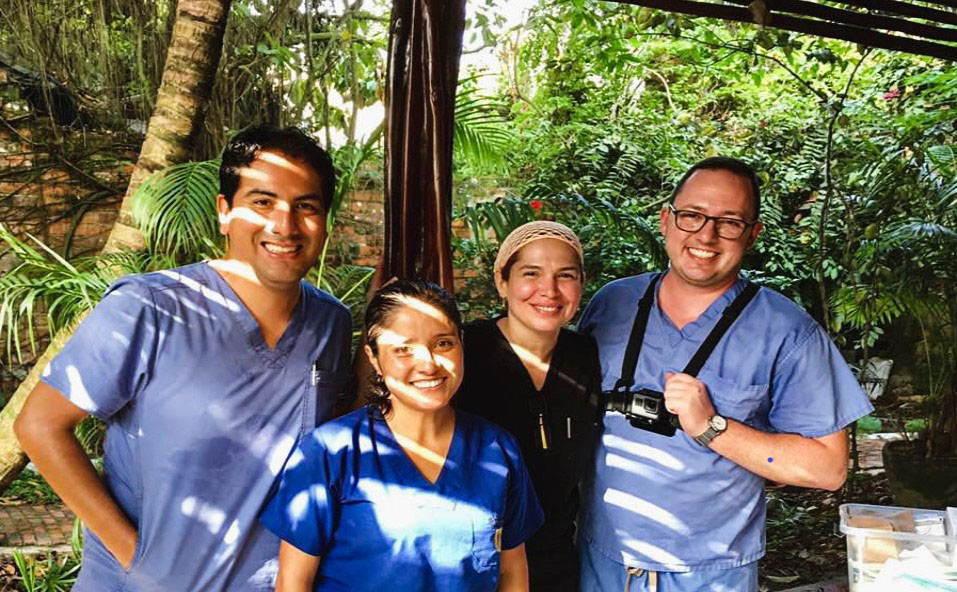
 Oral diseases go unnoticed but affect billions of people around the world. The Global Burden of Disease Study 2016 estimates that more than half of the world’s population is burdened with untreated oral diseases, which can lead to pain, infection, tooth loss, and loss of productivity. According to an International and American Associations for Dental Research (IADR/AADR) report, the total global costs associated with oral diseases is approximately $442 billion per year. Oral diseases are the most common non-communicable diseases (NCDs), and periodontal (gum) disease is a risk factor for other prevalent NCDs, such as diabetes and cardiovascular disease (CVD).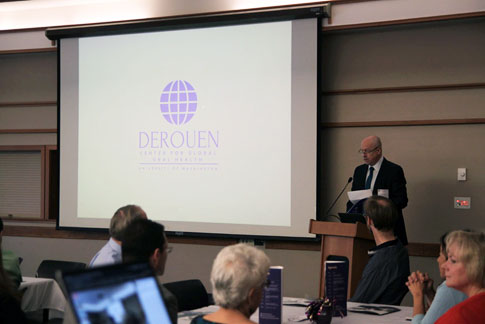
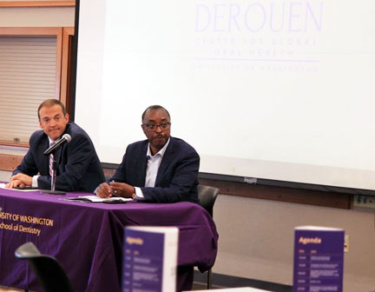
 In July 2019, the Timothy A. DeRouen Center for Global Oral Health was awarded Morell Research Fund for project “Refugees’ Endeavors For Utilizing Governmental Existing Efforts in the State (REFUGEES); Dental Health Care Utilization Among Newly Resettled Refugees 2015-2018,” led by our intern Jennifer Liu, UW MPH Epidemiology graduate student.
  The world is facing one of the worst migration crises in recent history. At the end of 2018, 70.8 million people were forcibly displaced worldwide due to persecution, conflict, violence or human rights violations. Within the United States of America, Washington State resettles the second largest number of refugees. During the resettlement process, refugees are insured through Medicaid and must receive a comprehensive health assessment. However, oral health assessments are not completed or adequately addressed during this process.