Our manuscript publishing class for junior researchers in Kenya is off to a great start as classes began in March 2021. The project was made possible by the University of Washington’s (UW) Global Innovation Fund (GIF), with collaborative efforts between the UW, the University of Nairobi (UoN), and Moi University (MU). Ten students were enrolled in the virtual training program, led by an interdisciplinary team from the University of Washington and the University of Nairobi, including the UW Health Sciences and Suzzallo Libraries (Lynly Beard and Elizabeth Bedford), Global Health and School of Dentistry (Joe Zunt and Ana Lucia Seminario), MU School of Dentistry (Caroline Kilbosia), UoN School of Dentistry (Arthur Kemoli), and our class coordinator from California State University Northridge, Mink Lee.
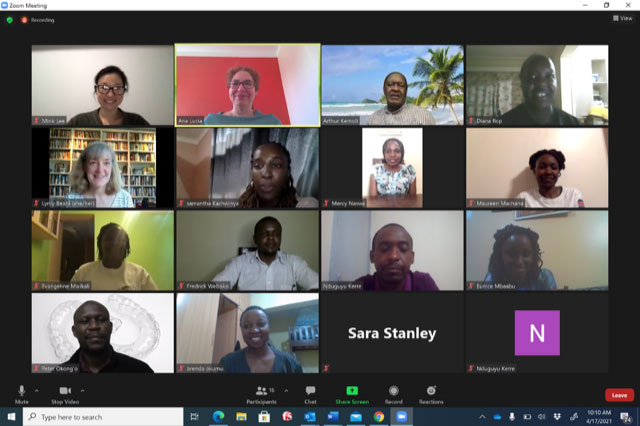
The cohort has an equal representation of newly graduated junior investigators from the University of Nairobi and Moi University in Kenya, including one trainee from Uganda. These trainees come from diverse areas of the country, and seven out of ten are female. Utilizing virtual ‘breakout’ rooms has fostered active participation despite the challenges of an online environment. Their diverse professional backgrounds in oral healthcare allow them to share different perspectives and receive feedback from their peers. The students are learning and enjoying camaraderie through sharing ideas, and support has come naturally for many, having graduated from the same universities. We hope that the program will provide the training and resources to increase the students’ manuscript submissions as we work towards expanding global oral health research capacity in Kenya.
 The Timothy A. DeRouen Center for Global Oral Health was recently gifted an endowment by our founder and his wife, Tim and Cheryl DeRouen. This generous gift is earmarked to grow and expand the center, and to expand research capacity in oral health in low- and middle-income countries.
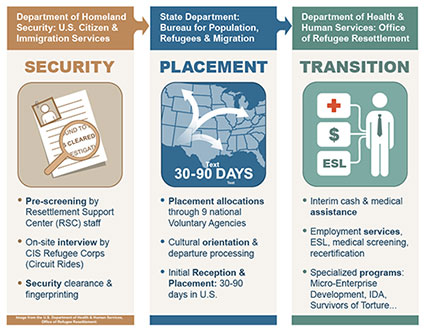 Refugees often experienced trauma in their home country, and during the migratory process to neighboring countries and refugee camps. Studies have shown that refugees have worse oral health than the vulnerable and underserved populations of their host countries. Furthermore, oral care might consist of just emergent removal of teeth and or abscess treatment with antibiotics. Additionally, many host countries have no pediatric oral care or enough fluoride in water to prevent tooth decay. By the time their migratory process ends in the western world, many face new problems, including learning a new language, finding a job, educating themselves and their children, and generally adapting and acclimating to their new environment. By the time refugee families are in the United States, oral health can seem unimportant compared to the accumulated trauma before their final resettlement.
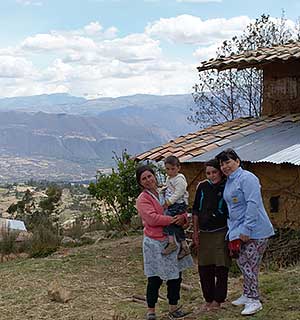 In Peru, according to the Ministry of Health (MINSA), dental caries is one of the most prevalent diseases in the population and oral cavity problems are the main cause of medical visits. In response to this problem the Peruvian State approved the
 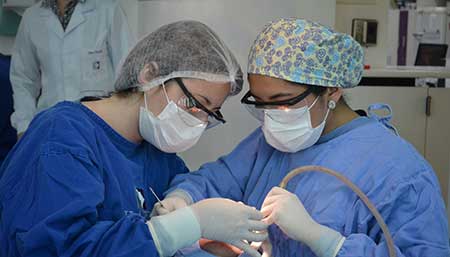 As a health profession, dentistry has been affected by the COVID-19 pandemic, not only in terms of preventing and spreading infections, but also in providing care. Within the areas of dentistry, oral implantology is one of the specialties most affected by its invasiveness since it combines surgical procedures, prosthetic interventions, and aerosol-producing interventions. One of the biggest concerns of dental professionals was to know what the impact of the COVID-19 pandemic would be on implant dentistry and the future perspectives in terms of epidemiological trends, education, biosecurity and professional practice.
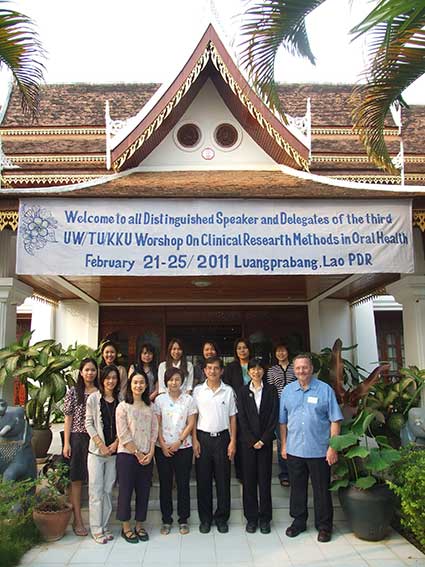 To build research capacity, they structured a three-tier training program. The first tier was a five-day workshop in Thailand which has trained over 100 participants, a second tier was attending the Summer Institute held at University of Washington in Seattle and trained over 30 participants, and the third tier was completing a PhD program in Thailand and trained approximately 10 participants. Since the inception of this research expansion program, hundreds of researchers in Thailand and surrounding countries have been trained in research methodologies such as epidemiology and biostatistics.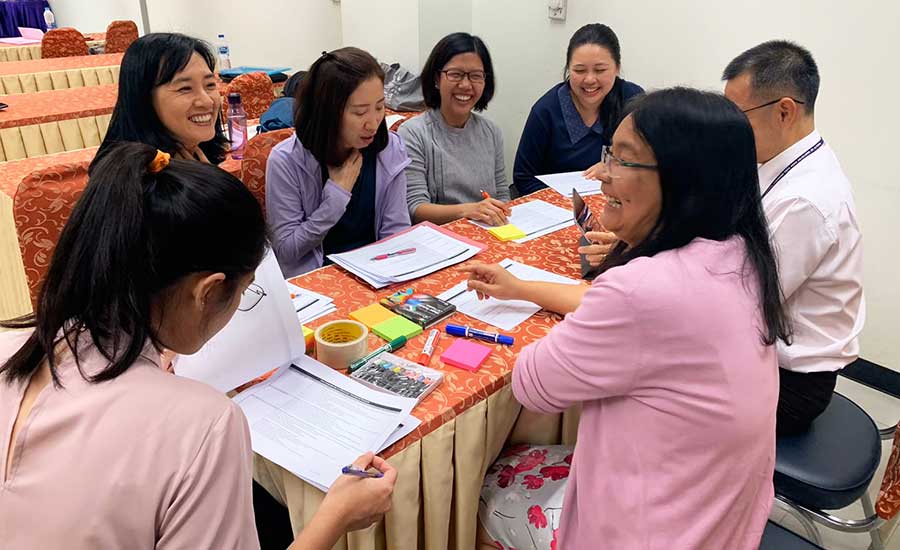
 The Timothy A. DeRouen Center is among the 2021 recipients of the University of Washington (UW) Global Innovation Fund (GIF). GIF is an award given through the UW Office of Global Affairs. It funds research collaborations that advance interdisciplinarity across the world. This grant is the result of inter-professional collaboration among the School of Dentistry (Pediatric Dentistry and the Office of Regional Initiatives in Dental Education), School of Public Health (Global Health) and the Health Sciences and Suzzallo libraries . The project aims to train junior Kenyan researchers to publish their research work by implementing a curricular program in manuscript writing and provide support for journal submission fees.
 The COVID-19 pandemic has emphasized the social, economic, and health inequalities in our society, including existing global oral health inequalities. In the past, the NIH has focused on broadening the public health and medical research capacity present in low- and middle- income countries. There is a global shortage of dentist-scientists as well, especially in developing countries, such as Thailand. Investing in research in a recent project with the University of Washington (UW) DeRouen Center for Global Oral Health and the National Institute of Dental and Craniofacial Research (NIDCR) has not only impacted trainees’ career development but enhanced advancement of oral health research of South East Asia. The success of partnership calls for expanding oral health research training in other low-income countries.
 Arcora Foundation is Washington state’s largest foundation dedicated exclusively to improving oral health. A nationally recognized catalyst for change, Arcora ensures policymakers, advocates, and the public have the right information to make wise decisions that lead to better health. Their goal is to change the trajectory of oral health so that in the future everyone can enjoy the benefits of good oral health.